AMAZING SPIDER-MAN FACSIMILE #14 — The Green Goblin’s Debut in Full Glory
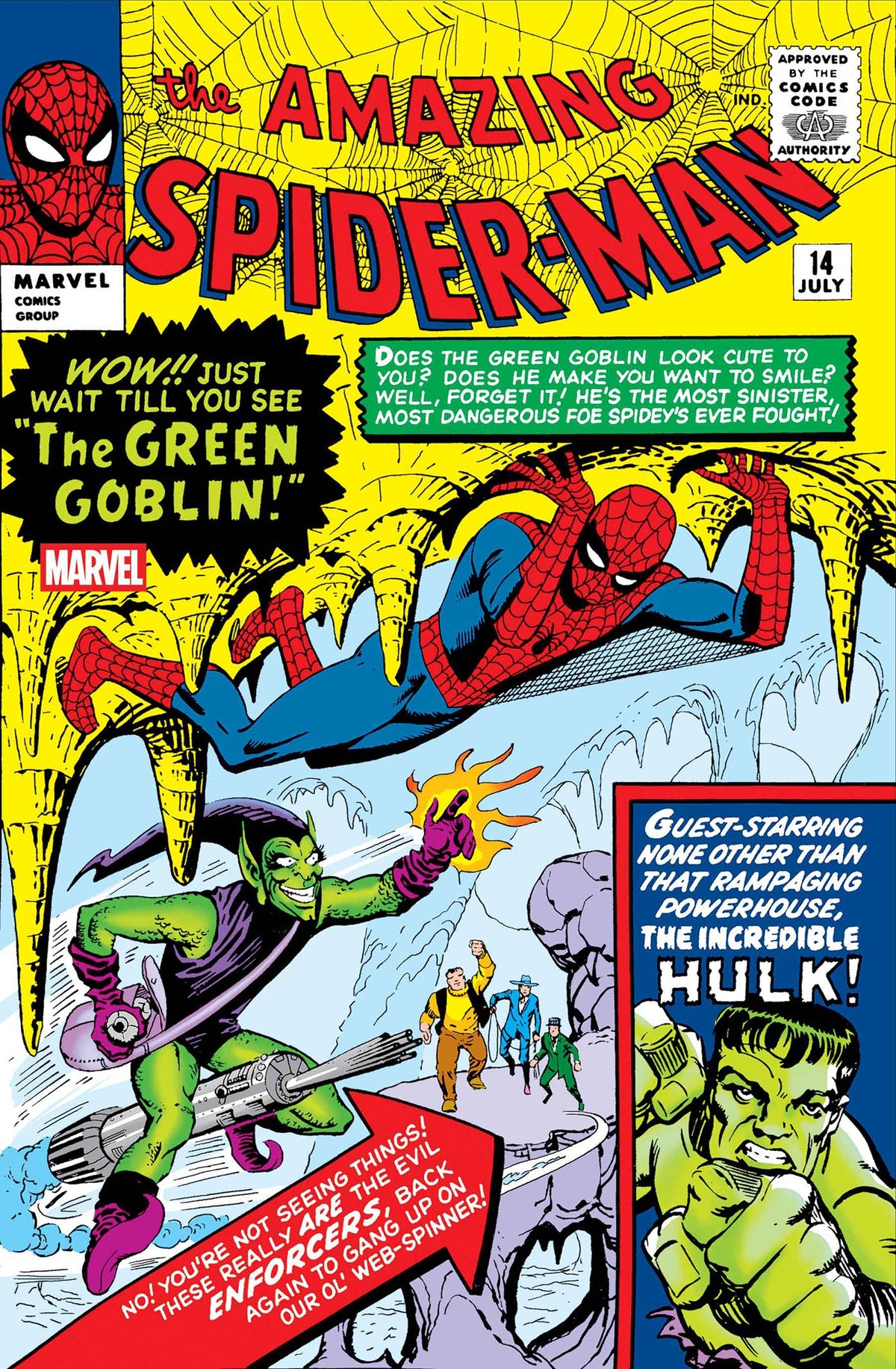

Step back into the Stan Lee and Steve Ditko era with the facsimile edition of Amazing Spider-Man #14. This is where the Green Goblin first swung into frame, turning a movie set into a death trap. It’s a foundational chapter in Spider-Man’s lore, presented exactly as it hit newsstands decades ago.
There is a specific kind of magic in holding a comic that feels like a time capsule. This facsimile edition of Amazing Spider-Man #14 doesn’t just reprint the issue; it preserves the entire artifact. You get the original art, the original ads, and that distinct mid-century pacing. It’s a love letter to the era where every cliffhanger felt like the end of the world.
Peter Parker is caught in a trap that feels both silly and sinister. He agrees to act alongside a cast of extras, only to realize too late that the stunt coordinators are actually the Enforcers. The Green Goblin, perched atop his mechanized glider, isn’t looking for applause—he’s looking to end Spider-Man’s career permanently. The set is rigged, the stakes are lethal, and the villain is playing chess while everyone else is moving checkers.
What makes this issue sing is the sheer audacity of the premise. Ditko’s art captures the kinetic energy of the fight, from the sweeping motion of the glider to the confusion on Peter’s face. Then, in a twist that feels almost too big for the format, the Incredible Hulk crashes the production. The clash of these two powerhouses turns a localized threat into a city-wide spectacle, reminding us why Spider-Man’s rogues gallery is so beloved.
If you’ve been following the newer runs of Amazing Spider-Man, this is the root. It’s the origin of the Goblin, the man who has haunted Peter Parker longer than almost anyone else. Seeing the initial blueprint for that rivalry is essential context. It’s not just nostalgia; it’s the foundation of the character’s mythos.
I’d grab this one if you want to see where it all began. The facsimile format is perfect for revisiting these classics without worrying about condition or wear. It’s a standalone read, but it adds so much depth to the broader Spider-Man narrative. Check it out on the product page and let me know what you think of the early Goblin designs.