Crowbound #1 — Jeff Lemire and Dustin Nguyen Forge a Haunting Southern Gothic Epic
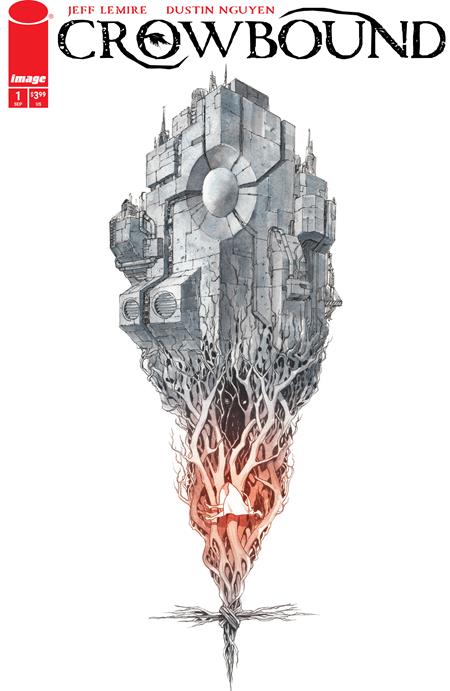

Jeff Lemire and Dustin Nguyen reunite for Crowbound, a visceral tale of maternal desperation set in a dystopian wasteland. When a totalitarian regime threatens to take her daughter, a factory worker makes a pact with a terrifying supernatural queen. It’s a heart-wrenching blend of neo-western grit and southern gothic horror that demands to be read.
There is a specific kind of magic that happens when Jeff Lemire and Dustin Nguyen put pencil to page, and Crowbound is the latest testament to that alchemy. This isn't just a new series from two titans; it's a genre-bending event that feels both ancient and urgently contemporary. If you’ve been following Lemire’s work, you know he thrives in the quiet moments between the noise, but here, that quiet is drowned out by the roar of a dystopian machine and the whisper of something far older and hungrier lurking in the swamp.
The stage is set in a world fractured by the Factory, a monolithic structure that splits the earth and the lives of its inhabitants. On one side, desolate settlements cling to existence in submerged villages and deadly swamps, forever living in the shadow of the industrial beast. Rose is a woman of the shanty towns, an ordinary worker whose life is defined by the grind. But her ordinary existence is shattered when her young daughter, Ava, is violently snatched away from their home, a year before she is due to join the workforce herself.
Desperate and unwilling to accept the loss, Rose is drawn outside the Factory’s walls, into a surreal landscape where the laws of nature bend to the will of ancient forces. It is here she encounters the Scarecrow Queen, a figure of terror and power who offers Rose a single, impossible choice: save her daughter, but at the cost of her own soul. This is a story about the visceral, violent lengths a mother will go to protect her child, wrapped in the aesthetic of a dark, post-apocalyptic neo-Western.
Nguyen’s art brings a haunting beauty to Lemire’s bleak vision, turning the swamp and the settlement into characters in their own right. The visual storytelling is lush and immersive, grounding the supernatural elements in a tactile reality that makes the horror feel immediate. This is the kind of book that stays with you, not because of the shock value, but because of the emotional weight it carries. It’s Margaret Atwood meets Cormac McCarthy, filtered through a lens of dark fantasy that is uniquely Lemire and Nguyen.
If you’re looking to build your stack around this debut, consider picking up a companion piece that shares this grim, atmospheric tone. There is a quiet resonance with works that explore the resilience of the human spirit against overwhelming odds, and this book will likely find its home on shelves next to those timeless, character-driven epics. Trust me on this one—it’s the kind of series that rewards patience and demands your full attention from the very first panel.