Green Lantern #37 — Jeremy Adams and Xermanico Dive into the Digital Dark Web
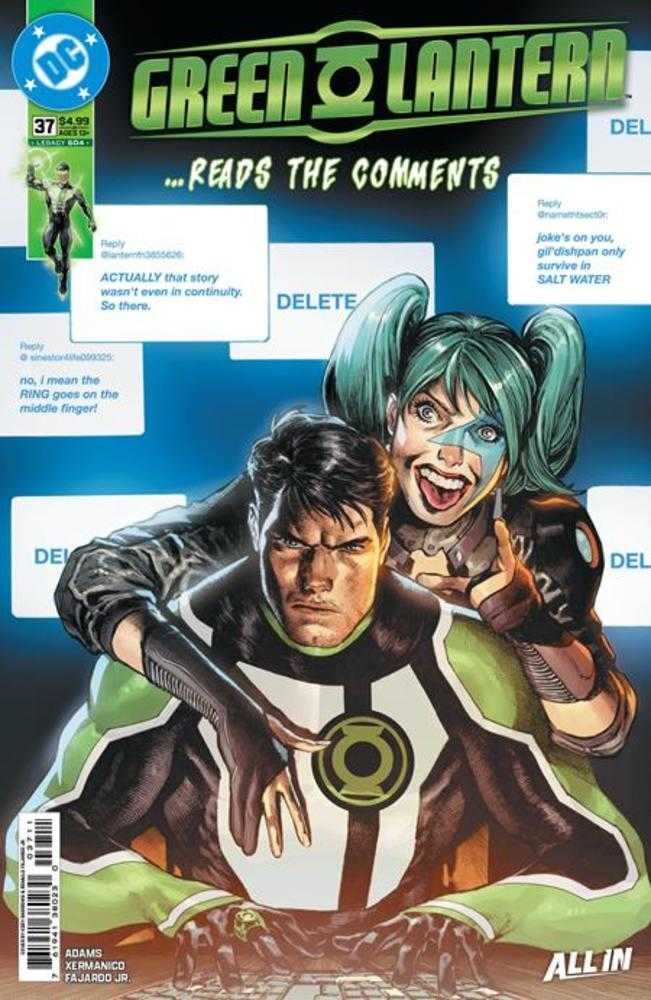

Kyle Rayner breaks the golden rule of the internet, drawing the ire of a malevolent force that lurks in the shadows of the digital world. Jeremy Adams and Xermanico bring a fresh, high-stakes tension to the Green Lantern mythos.
There is a specific kind of dread that comes from realizing your digital footprint has been noticed by something that doesn't belong in the real world. It’s the feeling that the screen on your desk isn’t just a window, but a door. In Green Lantern #37, writer Jeremy Adams taps into that modern anxiety, grounding the cosmic power of the Green Lantern Corps in a very immediate, very human vulnerability.
The premise is deceptively simple and instantly relatable. Kyle Rayner, alongside his friend Odyssey, finds themselves deep in the throes of being terminally online. But the internet has its own folklore, and there is one rule every user knows by heart: never feed the trolls. Kyle, perhaps in a moment of hubris or just bad timing, breaks that rule. What starts as digital noise quickly curdles into something far more sinister as death threats begin to surface, pointing directly at Odyssey.
This isn't just a case of bad faith actors posting comments; it’s a summoning. A malevolent force, one that feeds on mockery and malice, has taken notice of Earth's Green Lantern. Suddenly, the battle isn't fought with a power ring and a flashlight battery, but in the spaces between pixels. The stakes feel personal because the threat is hiding in the same devices we all carry, making the danger feel closer than any alien invasion ever could.
Visually, the issue benefits from the steady hand of Xermanico, who brings a textured, atmospheric weight to the digital realm. You can feel the tension in the panel layouts as the line between the online and offline worlds begins to blur. Cover artist Eddy Barrows also delivers a striking look that hints at the digital chaos waiting inside, making this a cover that demands to be pulled from the bin.
If you enjoy stories that take a classic sci-fi concept and filter it through contemporary fears, this is a compelling read. It’s a reminder that even with the power to create anything in existence, some things are best left entirely offline. Trust me on this one — it’s the kind of issue that sticks with you long after you’ve put the book down.