If Destruction Be Our Lot #4 — Andy MacDonald’s chaotic circuitry meets a desperate escape
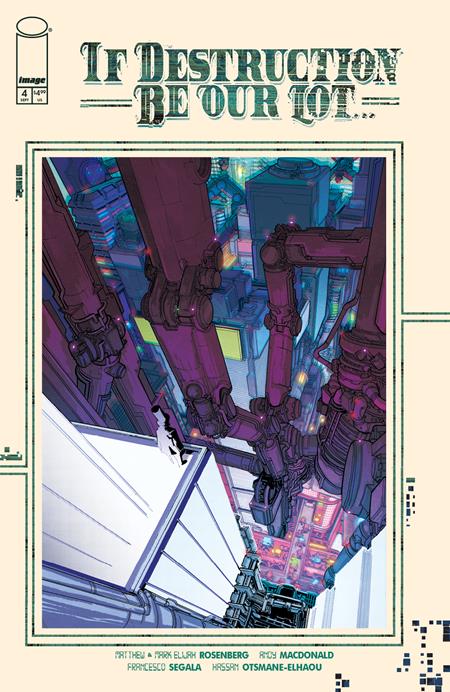


Abe’s electricity addiction is spiraling, and the only cure might be a journey outside the walls. Andy MacDonald and Francesco Segala bring their signature kinetic art to a story where staying still is the real danger. The breakout hit of 2026 is about to change everything.
There’s a specific kind of tension that comes from watching a character try to outrun their own biology, and Andy MacDonald has always known how to draw it. With "If Destruction Be Our Lot," he’s paired with writers Mark Elijah Rosenberg and Matthew Rosenberg to create a world that feels both beautifully broken and violently alive. This isn’t just about superpowers; it’s about the messy, desperate human (or post-human) need to find stability in a reality that keeps trying to shake you apart.
Abe is in trouble. Not just in a 'run from the bad guys' kind of trouble, but in a 'my own nervous system is betraying me' kind of trouble. His addiction to electricity isn’t a quirk; it’s a ticking clock. The solicit describes him seeing her everywhere, a hallucination or a memory that’s become as tangible as the voltage coursing through his veins. The stakes are intimate and visceral: can he kick the habit before he’s discarded by the system that built him?
Issue #4 pushes the story outward, literally. The characters are stepping outside the walls, moving from the confined chaos of their current situation to a wider, perhaps more dangerous world. MacDonald and artist Francesco Segala bring a kinetic energy that makes every panel feel like it’s vibrating. You can feel the static in the air. It’s the kind of book that demands to be read with the lights off, so you can focus on every spark and shadow.
The Rozenberg duo have built a reputation for stories that sit right at the intersection of high-concept sci-fi and raw emotional drama. Here, they’re exploring what happens when the machinery of your existence turns against you. It’s a theme that resonates deeply in a world increasingly dependent on tech, and it’s one that MacDonald visualizes with such flair that it’s easy to forget this is only the fourth issue. The breakout hit of the summer is just getting started.
If you’ve been following the image-centric chaos of MacDonald’s previous work, this is where it all coalesces. The visual storytelling here is so strong that you might not even need the dialogue to follow along, and yet, the emotional beats hit harder with every word. Keep an eye on this one as it moves away from the walls — the scope is expanding, and the colors are only getting brighter.