Killer Influences #3 — Joey Esposito and Valeria Burzo Close the Circle on Social Media's Dark Side
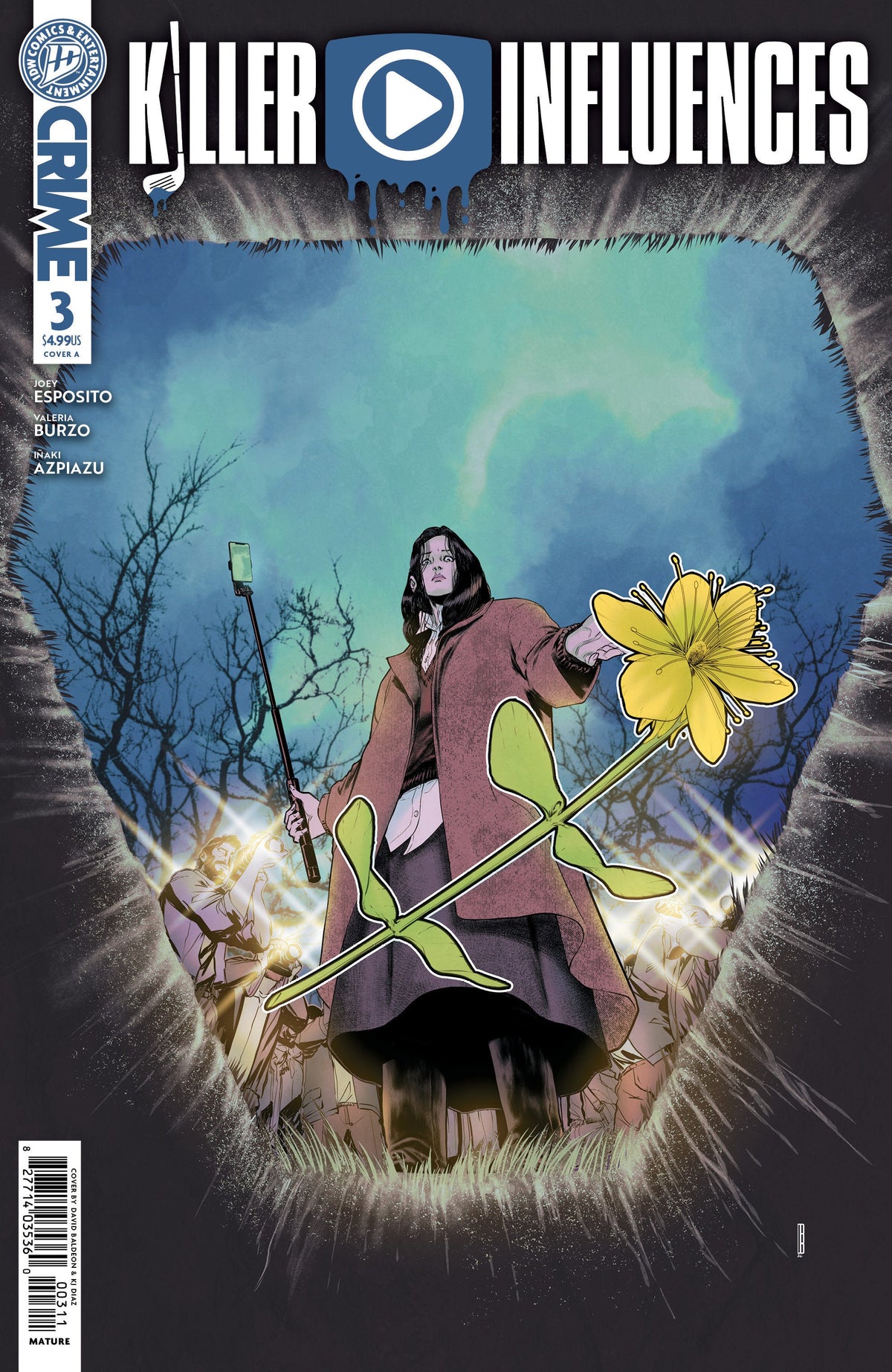

The alliance between Melvin and Kylie has shattered, leaving them as bitter enemies in this thrilling finale. As Melvin hunts her down, Kylie must decide if her digital empire is worth more than her life, forcing a choice between becoming a martyr or a grifter.
There is a specific kind of horror that comes from watching a digital empire crumble in real-time, and that is exactly the tension Joey Esposito has been building since the first issue of Killer Influences. What started as a sharp look at the intersection of true crime fandom and modern clout has evolved into a high-stakes psychological cat-and-mouse game. Now, with the third and final issue hitting shelves, the mask is fully off. The tepid cooperation between our protagonists has dissolved into something far more dangerous, and the stakes have moved from reputation to survival.
The setup here is beautifully messy. Melvin and Kylie, who began as reluctant allies bound by their shared obsession with the macabre, are now locked in a deadly feud. Melvin is hunting Kylie, treating her as his next victim, but Kylie isn’t just running—she’s fighting back. The brilliance of this arc lies in the weapon she’s forced to use: her entire life’s work. To stop him, she has to deploy every piece of knowledge she’s gathered about serial killers and Melvin himself. It’s a clever inversion of the genre, where the protagonist’s expertise is both her shield and her greatest liability.
This issue is a must-read because it asks the kind of question that keeps you up at night: would you rather die an icon or live as a known grifter? Valeria Burzo’s art captures the claustrophobia of this digital-physical crossover perfectly, turning social media metrics into tangible threats. The question isn’t just whether Kylie can survive Melvin’s pursuit, but whether she can survive the fallout of exposing her own game. Even if she makes it out alive, the people who’ve been watching might have seen too much. The path back to normalcy feels impossible, which makes the final showdown all the more compelling.
If you’re looking for a companion read that shares this dark, satirical take on fame and violence, keep an eye on the crime shelves. There are a few other titles from IDW that explore the moral decay of celebrity culture, but none quite hit the same notes of personal betrayal and digital consequence. This trilogy has stood alone in its specificity, and closing it out with such a sharp, unsettling finale is a rare treat.
I’ll leave you with this: the cover by David Baldeón hints at the tension in the final pages, but the real payoff is in the character work. Esposito and Burzo have crafted a conclusion that doesn’t just tie up loose ends; it reframes everything that came before. Grab this one to see how a story about online influence ends up being a story about the cost of being seen. It’s a tight, potent read that will stick with you long after you turn the last page.