Murder Drones #6 — The Final Confrontation with the Absolute Solver
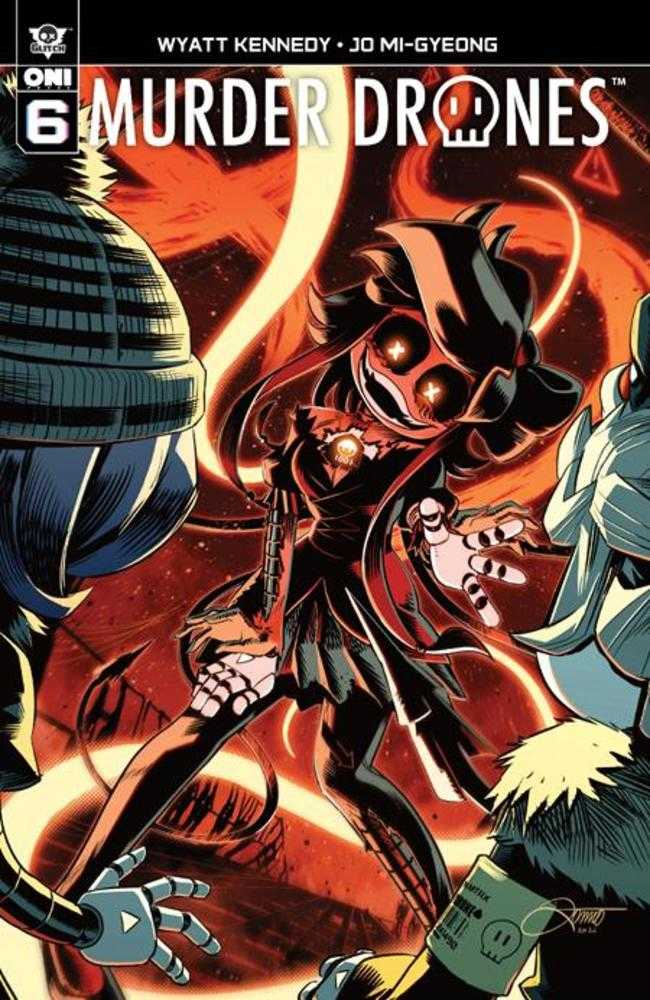


The global animation phenomenon lands in comics form for a stunning six-issue run. Writer Wyatt Kennedy and artist Jo Mi-Gyeong bring Uzi’s internal and external battles to a hilarious, heartfelt conclusion.
If you’ve been watching the screens, you know Murder Drones has become a cultural touchstone. It’s rare that an animated series translates so perfectly into another medium, but this Oni Press adaptation doesn’t just retell the story—it reimagines the chaos with fresh energy. We’re landing on the final issue of this six-issue arc, which is the perfect time to jump in if you’ve been following along, or a great moment to catch up on the whole journey from the start.
The premise remains as sharp as ever: in a world where humans are gone, worker drones and disassembly drones are locked in a tense, often deadly dance. Uzi, our rebellious worker, finds herself entangled with a disassembly drone, uncovering an eldritch threat that goes far beyond simple robot politics. Now, the stakes have shifted from surviving the enemy outside to confronting the horror within. The Absolute Solver isn’t just a villain here; it’s a reflection, a virus of the soul that Uzi must face head-on.
Writer Wyatt Kennedy, known for his work on Nights and Wiccan, brings a voice that balances genuine dread with the sharp, self-deprecating humor that defines the characters. You can feel the weight of Uzi’s journey in every panel, but there’s also a levity that keeps it from getting too heavy. It’s that specific brand of 'I’m terrified but I’m also going to make a joke about it' that makes these characters so easy to root for.
Visually, Jo Mi-Gyeong is doing the heavy lifting here, translating the show’s distinct aesthetic into something that feels alive on the page. The art is otherworldly, capturing the sleek horror of the disassembly drones and the gritty, industrial wear-and-tear of the workers. The final issue promises a climax that is both visually stunning and emotionally resonant, wrapping up threads that have been woven tightly since issue one.
This is the kind of series that proves animated adaptations can stand on their own as literary experiences. If you’re grabbing this final issue, you’re getting a complete, self-contained story that stands as a testament to the show’s best qualities. Keep an eye on the cover art by Alessio Zonno, too—these tend to move quickly, and it’s nice to have a beautiful piece of art to keep when the story ends.