
Neighborhood Watch #4 — Sarah Gailey’s Psychological Thriller Hits Its Tense Peak
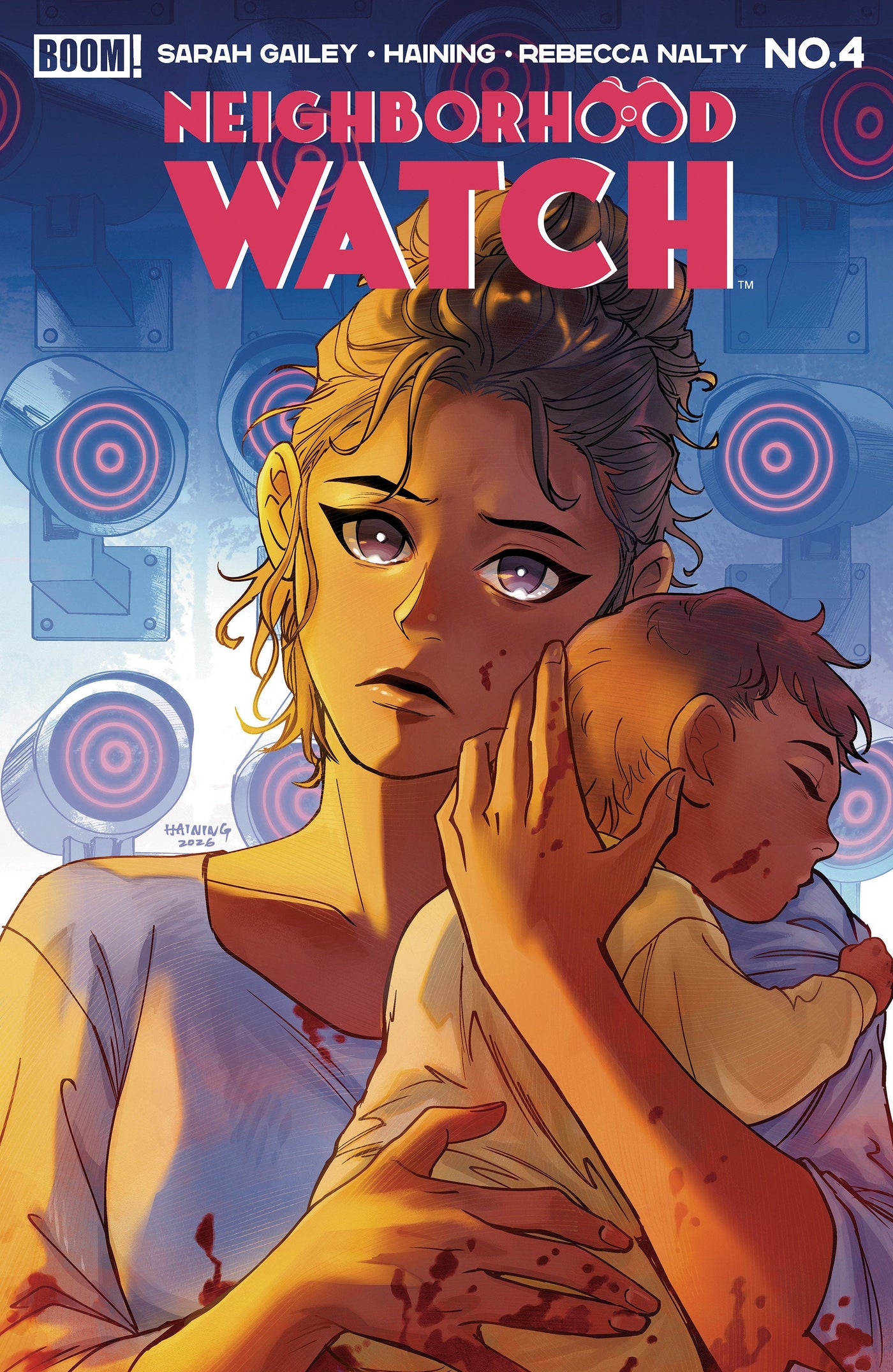

Jill has survived the attempt on her life, but the truth she’s been hiding has finally caught up. In the penultimate issue of Boom! Studios’ gripping thriller, Sarah Gailey and Haining pull the knot tight, forcing a woman torn between two lives to make a choice that could cost her everything.
There’s a specific kind of dread that comes with a neighborhood watch meeting. It’s not just about keeping an eye on the property values; it’s about the sudden, sharp realization that the people next door might be hiding something far more dangerous than a stray cat. Sarah Gailey taps into that primal anxiety in Neighborhood Watch, turning a quiet suburban setting into a pressure cooker where trust is the most volatile currency.
We’re deep in the final stretch of this series, and things have moved past simple suspicion. Jill has survived an attempt on her life, but survival is only the beginning of the problem. With Bianca and Val working to keep her safe, Jill is forced to confront the mountain of lies she’s built over who knows how long. The truth, it turns out, doesn’t just hurt—it hunts.
This is where the book truly shines: the internal conflict is as lethal as the external threat. Jill isn’t just running from an assassin; she’s wrestling with her own identity. She’s caught between the life she always wanted and this new, unexpected family that has shown her a different way. That tension gives every page a heavy, emotional weight that Haining’s art translates into something visceral and immediate.
If you enjoy stories where the mystery is secondary to the character’s fracture, this is the one. It’s a masterclass in pacing, taking the setup we’ve been building toward and tightening the screws until the only question left is who Jill will become when the dust settles. It’s tense, it’s smart, and it’s impossible to put down.
As we approach the end of this run, keep an eye on how the visual storytelling shifts between Jill’s past and her present. Haining uses color and composition to signal which version of her reality is currently in play, and it’s a subtle detail that pays off in a major way. It’s a perfect example of how the art team isn’t just illustrating the story—they’re deepening it.