
Planet ATMOS Exordium #5 — Tommy Lee Edwards’ Weapon Finds Her Own Path
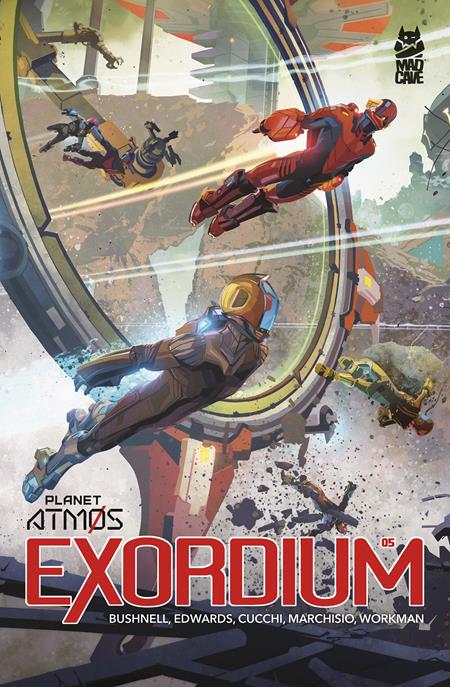

Addy Aker was engineered as a living weapon, but #5 of Planet ATMOS Exordium asks what happens when she tries to be something else. Tommy Lee Edwards and Andrea Cucchi deliver a tense chapter where old allegiances fracture and Jötun's reach grows darker.
There is a specific kind of tension in watching a character realize they were never meant to be what they were built for. In Planet ATMOS Exordium #5, Addy Aker stands at that exact precipice. For years, she has been a tool—engineered on a dead world, sharpened into a weapon, and handed over to an order that sees her as property rather than a person. Now, on the planet Atmos, she is trying to shed that skin. But the past doesn't just fade away; it hunts you down.
The premise of this Mad Cave Studios series is a potent mix of sci-fi thriller and character study. Addy isn't just escaping; she is actively dismantling the life she was forced to lead. The catch? The order she left behind isn't finished with her yet. As she reaches for autonomy, the shadows of Jötun stretch wider than anyone expected, turning every step toward freedom into a high-stakes game of survival.
Tommy Lee Edwards continues to prove why he is such a compelling creative force here. His cover work on this issue frames the mood perfectly: solitary, intense, and charged with impending conflict. Inside, Andrea Cucchi’s art brings the grit of Atmos and the cold precision of Addy’s memories to life. The visual storytelling captures that fragile moment between past trauma and future possibility, making the threat feel immediate and personal.
If you enjoy stories where the protagonist has to fight for their identity as much as their life, this is the drop to catch. It’s less about big space battles and more about the psychological weight of breaking chains. The way the narrative tightens around Addy’s choices in this fifth issue suggests that the cost of her new freedom is about to become very real.
Keep an eye on the variant covers for this one—Edwards’ stylized approach often becomes a collector’s favorite as the series gains momentum. It’s a small detail, but the kind of quality that signals a book worth keeping on your shelf for the long haul.