
Red Roots #5 — Lorenzo De Felici’s ‘The Dam’ Keeps Its Secrets Tight
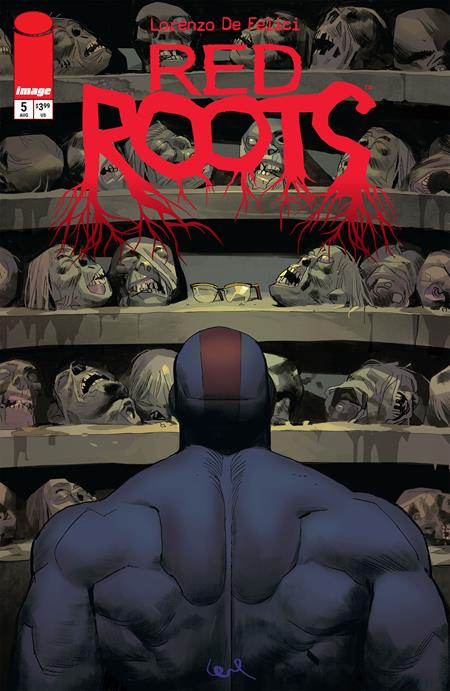

Lorenzo De Felici is doing it all again for Red Roots #5. The story inside The Dam has shifted from quiet dread to terrible revelations, leaving the protagonists with no room to catch their breath. This is the issue where the foundation starts to crack.
There’s a specific kind of tension that comes from a creative team handling both writing and art. You get a unified vision where every shadow and line of dialogue serves the same singular mood. Lorenzo De Felici is that rare creator who controls the entire pipeline for Red Roots, and by issue five, that control is absolute. The comic has established itself as a slow-burn dread engine, and De Felici is pulling the levers with expert precision.
This issue finds our characters deep inside a location simply called 'The Dam.' It sounds like a backdrop, but in De Felici’s hands, it’s an antagonist. The solicit promises 'terrible revelations' and 'new encounters,' which is a polite way of saying the quiet is over. The characters are no longer just investigating; they are reacting to a situation that has actively turned against them. There is no respite here, just the tightening of a vice.
I’m drawn to this spot in the series because of how De Felici escalates the stakes without losing the atmospheric grip. Early issues might have felt like a mystery, but Red Roots #5 shifts into something more visceral. The art style carries the weight of the narrative, turning every panel into a moment of potential danger. It’s the kind of storytelling that trusts the reader to feel the anxiety rather than explaining it.
If you enjoy comics that prioritize mood and artistic cohesion over explosive action, this is a essential read. The way De Felici constructs the environment makes the setting feel alive and hostile. It’s not just about what the characters find in The Dam, but how the architecture of the place reflects their unraveling psyches.
Keep an eye on the variant cover options. De Felici’s own artwork tends to be highly collectible among fans of his style, and this issue’s visual identity is strong enough to stand on its own. The primary cover is striking, but the alternate takes often capture a different nuance of the terror within. Pick the one that speaks to you, but don’t wait too long—De Felici’s runs have a habit of moving quickly once people catch wind of them.