
Wonder Woman #72 Facsimile Edition — William Messner-Loebs and Lee Moder’s Classic Origin Retold
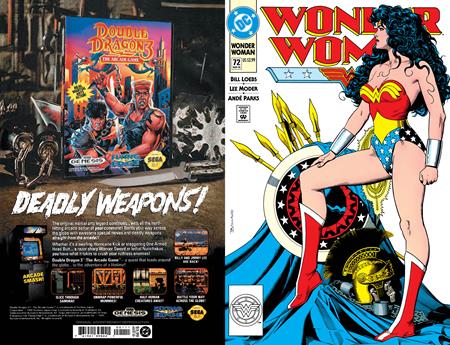


Step into a pivotal moment in Diana’s journey as she returns from exile to confront a changed home. This facsimile edition preserves the classic storytelling of William Messner-Loebs and Lee Moder, capturing the emotional weight of Wonder Woman discovering her world has shifted without her.
There is a particular kind of gravity that comes with a Wonder Woman story written by William Messner-Loebs. He has a knack for grounding the mythological in the deeply human, and here, that gift is on full display. This facsimile edition brings back a moment that feels both timeless and urgently relevant, capturing Diana not just as a warrior, but as someone navigating profound displacement. It’s a story about the cost of absence, rendered with the kind of narrative care that makes you want to linger on every page.
The premise is elegantly simple but emotionally complex. Wonder Woman has been away, exiled to the far reaches of space, and her return is meant to be a homecoming. Instead, she finds that time and circumstance have moved on without her. As she sits down to recount the legend of the Amazons and her own origin to her friends, the act of storytelling becomes a way to bridge the gap between who she was and who she must now be. But beneath the calm surface of this recounting, a growing alarm takes hold. Themyscira is not the place she left behind.
Lee Moder’s art provides the perfect visual anchor for this tale. His style is clean, expressive, and deeply attuned to the emotional states of the characters. You can feel the silence of the Amazonian halls and the weight of Diana’s realization through his paneling and linework. It’s a beautiful example of how art can carry narrative tension without needing to raise its voice. The cover by Brian Bolland, a master of crisp, iconic design, hints at the precision and elegance you’ll find inside.
If you’ve been following Wonder Woman’s journey through the years, this issue serves as a poignant reminder of the character’s resilience and the enduring strength of her bonds. It’s a story that honors the past while forcing the present to confront new realities. For readers who love stories that balance superheroics with intimate character drama, this is a essential read. It’s the kind of comic that stays with you, not because of what happens, but because of how it makes you feel about the people involved.
I always think it’s worth grabbing the Brian Bolland cover if you can find it — his designs are just that iconic. But more importantly, approach this issue as a piece of character study. It’s a quiet, powerful moment in Diana’s timeline that deserves your attention. Trust me, you’re going to want to experience this classic tale in its original form, preserved perfectly for a new generation of readers.